Artificial intelligence in retail: how to personalize the shopping experience
Published on May 9, 2026
Introduction
Retail is undergoing a fundamental transformation. In 2026, artificial intelligence is no longer a futuristic concept—it's the competitive edge that separates thriving retailers from those struggling to adapt. The question isn't whether to implement AI in your retail strategy; it's how to do it effectively to create personalized shopping experiences that drive loyalty, increase conversion rates, and boost revenue.
Personalization powered by AI goes far beyond showing customers products they might like. It means understanding individual preferences, predicting buying behavior, optimizing inventory in real-time, and delivering seamless omnichannel experiences across physical stores, mobile apps, and websites. According to recent industry data, 76% of consumers expect personalized experiences, and retailers who implement AI-driven personalization see an average increase of 19% in sales and 15% improvement in customer retention rates. This article explores how to leverage artificial intelligence for retail personalization in 2026, offering practical strategies, real-world examples, and actionable insights for business owners and marketing managers ready to transform their customer experiences.
How AI personalizes customer journeys in modern retail
Personalization in retail has evolved dramatically. In 2026, AI systems analyze hundreds of data points—browsing history, purchase patterns, time spent on specific products, seasonal preferences, demographic information, and even social media interactions—to create detailed customer profiles. These profiles aren't static; they evolve with every interaction, allowing your retail business to adapt its offerings in real-time.
Understanding customer behavior at scale
Traditional retail couldn't scale personalized attention. A store clerk might remember that Mrs. Johnson prefers blue dresses, but managing this for thousands of customers across multiple locations is impossible without AI. Machine learning algorithms now perform this task instantly. When a customer visits your store or website, AI instantly identifies them, recalls their preferences, purchase history, and browsing patterns, then tailors their experience accordingly.
For example, a fashion retailer implementing AI personalization discovered that their system could identify which seasonal collections appealed to different customer segments up to 60 days before traditional seasonal planning would predict. This allowed them to stock inventory strategically and show relevant collections to customers at exactly the right time, resulting in a 28% increase in seasonal sales.
Dynamic pricing and personalized promotions
AI doesn't just personalize what customers see—it personalizes what they pay. Dynamic pricing systems analyze demand, inventory levels, customer lifetime value, and competitive pricing to adjust prices in real-time. Importantly, this doesn't mean charging loyal customers more; rather, it means optimizing margins while ensuring fairness and value perception.
A sporting goods retailer using AI-driven dynamic pricing increased overall revenue by 12% while maintaining customer satisfaction scores, by offering higher discounts to price-sensitive customers and reserved inventory for high-value customers willing to pay full price. This sophisticated approach requires AI to balance profitability with customer psychology—a capability that manual pricing teams simply cannot match at scale.
Pro Tip: Start personalization with your highest-value customer segments first. Identify your top 20% of customers by revenue, implement AI-driven personalization for them, measure the impact, then scale to broader audiences. This focused approach delivers faster ROI and builds internal buy-in.
Real-time inventory management and predictive analytics
Inventory management represents one of retail's greatest challenges. Too much stock ties up capital and increases waste; too little creates stockouts that disappoint customers and lose sales. AI transforms this dynamic by predicting demand with unprecedented accuracy, considering factors like seasonality, local events, weather patterns, social media trends, and even competitor activity.
Demand forecasting with machine learning
Modern AI systems predict demand at the SKU (stock-keeping unit) level, for specific locations, at specific times. A fashion e-commerce company implemented AI demand forecasting and reduced excess inventory by 23% while simultaneously reducing stockouts by 31%. This dual improvement is critical—it frees up capital while improving customer satisfaction because products are available when customers want them.
The system learns continuously. If a social media influencer mentions one of your products and sales spike, AI detects this unusual pattern and adjusts forecasts accordingly. Conversely, if unexpected weather impacts foot traffic, the system adapts inventory recommendations in real-time.
Supply chain optimization
Inventory personalization extends beyond your warehouse. AI optimizes which products arrive at which locations. A grocery retailer with 200+ stores could never manually optimize products for each location's demographics and preferences. But AI can—analyzing zip code demographics, local traffic patterns, purchase history by location, and even local events to determine the perfect product mix for each store.
One grocery chain discovered through AI analysis that their store in a retirement community needed different product proportions than their store in a university neighborhood, even though both locations had similar revenue. After optimizing inventory for each location's actual customer base, they increased sales per square foot by 18% and reduced waste by 15%.
Comparison: Traditional vs. AI-driven inventory management
Factor
Traditional Approach
AI-powered approach
Impact on business
Forecast accuracy
60-70% accuracy
85-92% accuracy
Fewer stockouts and less overstock
Time to identify trends
2-4 weeks
Real-time (hours)
Faster response to changing demand
Inventory holding cost
High (safety stock needed)
20-30% lower
Direct margin improvement
Labor required
10-20 hours/week per person
Automated analysis
Reduce manual forecasting
Personalization by location
Not feasible
Yes, by store and demographics
Better local relevance
Recommended tool
Manual spreadsheets
Zerpia AI systems
Data-driven decisions
AI-powered recommendation engines that drive conversions
Recommendation engines are personalization in action. When Amazon suggests products "customers who viewed this also bought that," or when Netflix recommends your next show, these are AI systems analyzing patterns across millions of users to predict what you specifically will want.
How recommendation algorithms increase average order value
Retail recommendation engines typically increase conversion rates by 5-15% and average order value by 10-20%. This happens because recommendations serve a dual purpose: they help customers discover products they actually want, and they strategically showcase higher-margin items.
A shoe retailer implemented AI recommendations and discovered that suggesting complementary products (socks, insoles, or shoe care products) resulted in a 34% higher attachment rate compared to random suggestions. More importantly, customers appreciated the recommendations because they were genuinely relevant—this builds trust and loyalty.
Personalization across the entire shopping journey
The most effective recommendation systems aren't limited to post-purchase emails. They're integrated throughout the entire experience:
Homepage personalization: Instead of showing the same homepage to everyone, AI dynamically generates personalized homepages. A customer interested in men's athletic shoes sees different featured products than someone browsing women's casual wear.
Search result optimization: When a customer searches "running shoes," AI ranks results based on their personal preferences, purchase history, and price sensitivity, not just keyword relevance or profitability.
Email marketing intelligence: Beyond "here are products on sale," AI determines which specific products to show each customer, the optimal send time for that customer (when they're most likely to engage), and the most effective messaging for their communication preferences.
A mid-sized fashion e-commerce business using AI-powered email personalization increased email revenue by 45% while actually reducing email frequency—they were sending fewer emails but with higher relevance.
Building recommendation engines with limited data
New retailers often worry that recommendation engines require massive datasets. While more data helps, modern AI systems employ sophisticated techniques that generate valuable recommendations with modest customer bases. Collaborative filtering, content-based recommendations, and hybrid approaches work effectively even with smaller audiences.
One startup fashion brand implemented AI recommendations after their first 500 customer transactions. Within three months, recommendations contributed 18% of total online revenue—before they'd been recommending randomly.
Omnichannel personalization: connecting online and offline experiences
Customers don't think in terms of "online" and "offline" retail—they think in terms of their preferred way to shop. Some research on a mobile app, purchase in-store, and return online. Others browse in-store and buy online. Seamless omnichannel experiences are no longer a luxury; they're table stakes in 2026.
Unified customer profiles across channels
The foundation of omnichannel personalization is a unified customer profile. When someone browses your website, visits your store, calls customer service, and engages on social media, all these interactions feed into one complete profile. This enables remarkable capabilities:
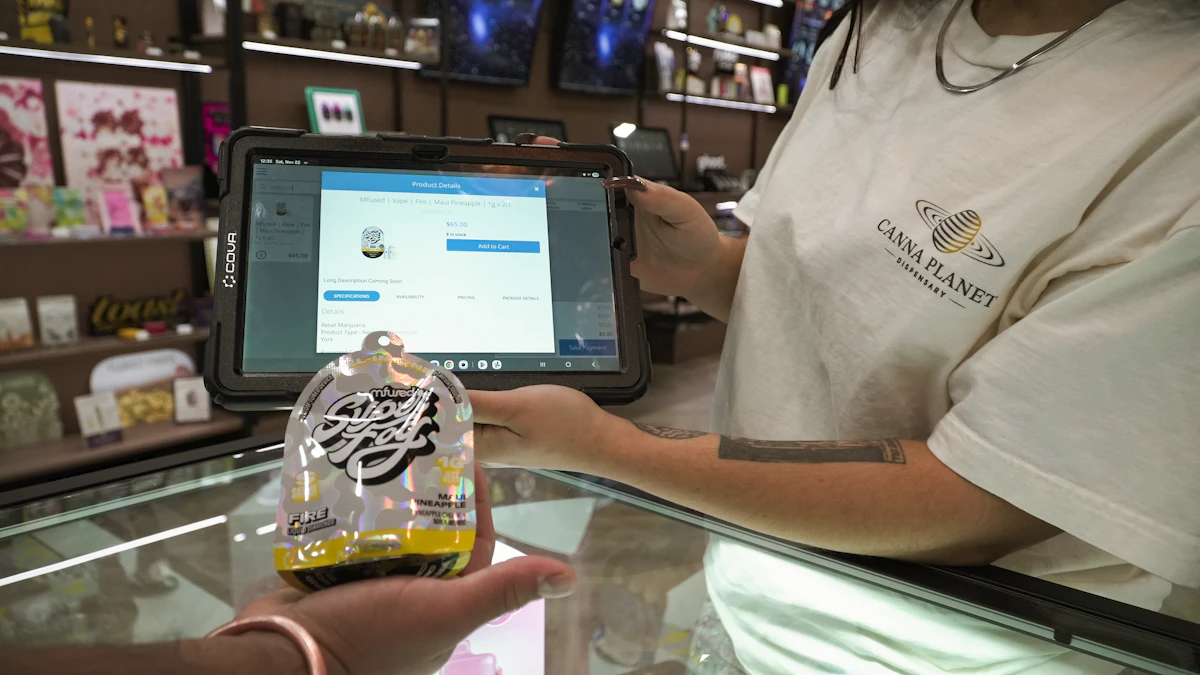
A customer walks into a physical store and a sales associate's tablet automatically shows that customer's browsing history on the website, items saved to their wishlist, and personalized recommendations based on their full history. The customer is surprised and delighted that the associate knows exactly what they're interested in.
Buy online, pick up in-store (BOPIS) with personalization
BOPIS (Buy Online, Pickup In Store) is increasingly important—studies show that 40% of consumers prefer this option for certain purchases. AI enhances BOPIS by personalizing inventory availability by location, offering same-store recommendations, and optimizing pickup speed through predictive staging (preparing items before the customer even arrives).
A major sporting goods retailer implemented AI-powered BOPIS and achieved a 60% faster pickup time by predicting which items customers would likely pick up and staging them before the customer arrived. This led to higher customer satisfaction and increased add-on purchases in-store.
Location-based personalization in physical stores
When customers opt-in to location services, AI can personalize their in-store experience. Their mobile app might notify them about products in nearby aisles that match their interests, provide virtual try-on technology, or offer location-specific promotions.
One luxury retailer used location-based personalization combined with AR (augmented reality) technology to allow customers to virtually try on jewelry in-store. Customers using this feature had a 52% higher conversion rate and a 28% higher average transaction value.
Pro Tip: Implement customer data platforms (CDPs) as the foundation for omnichannel personalization. A CDP unifies data from all customer touchpoints—website, mobile app, physical store, email, social media—creating the single source of truth that enables all other personalization efforts.
Building customer loyalty through AI-driven customer service
Personalized customer service is perhaps the most powerful loyalty driver. When customers feel understood and valued, they become repeat buyers and brand advocates. AI enhances customer service through intelligent routing, predictive support, and personalized communication.
Intelligent customer service routing and response
When a customer contacts your business—via email, chat, phone, or social media—AI instantly routes them to the best representative or automatically handles the issue if possible. The system considers customer value, issue complexity, representative expertise, and wait times.
A telecommunications company using intelligent routing improved first-contact resolution rates from 72% to 89% and customer satisfaction scores from 7.2/10 to 8.6/10. More importantly, high-value customers were automatically prioritized, ensuring they received premium service without having to request it.
Predictive support: solving problems before customers ask
Sophisticated AI systems don't wait for problems—they predict them. If AI detects that a customer frequently makes returns, or that a product typically fails within a certain timeframe, the system proactively reaches out with solutions, replacement offers, or helpful tips.
An electronics retailer noticed through AI analysis that a specific laptop model had a 12% failure rate within the first 90 days of purchase. Rather than waiting for customers to call with failures, they proactively contacted customers with that laptop, offered extended warranties at a discount, and provided troubleshooting guides. This reduced returns by 8%, increased customer lifetime value, and prevented negative reviews.
Personalized communication preferences and channels
AI learns how each customer prefers to be contacted. Some prefer email, others prefer text messages, and others want phone calls. Some want frequent communication, while others prefer occasional contact. AI respects these preferences, increasing engagement rates by 30-40% compared to one-size-fits-all communication strategies.
Empathy at scale: AI-powered chatbots and automation
Modern AI chatbots handle 60-70% of customer service inquiries without human involvement, freeing your team to focus on complex, high-value issues. These systems feel natural and helpful—they don't feel like talking to a robot. Zerpia AI Chatbot exemplifies this technology, providing 24/7 customer service that feels personalized and genuinely helpful while gathering valuable customer data that feeds back into personalization systems.
A fashion retailer implemented an AI chatbot for customer service and reduced response time from 6 hours to under 60 seconds. Customer satisfaction for chatbot-handled queries was 8.1/10—nearly identical to human agent satisfaction scores. This system also captured product preferences from conversations, improving personalization accuracy.
Implementation roadmap: getting started with retail AI personalization
Starting an AI personalization journey can feel overwhelming, but successful retailers break it down into phases. Here's a proven roadmap:
Phase 1: Data foundation (Months 1-3)
Before implementing any personalization, establish your data infrastructure. This means:
Implementing unified customer data platforms that collect data from all touchpoints
Ensuring data quality and completeness
Creating secure, compliant data storage (GDPR, CCPA, and other regulations)
Establishing data governance policies
Investment: $10,000-$50,000 USD depending on system complexity and current infrastructure. Timeline: 8-12 weeks.
Phase 2: Quick wins (Months 3-6)
After establishing your foundation, pursue quick wins that demonstrate ROI:
Email personalization recommendations
Website homepage personalization
Simple dynamic pricing for select products
Basic chatbot implementation
Expected ROI: 150-250% in the first quarter. Timeline: 3-4 months.
Phase 3: Advanced integration (Months 6-12)
With quick wins established, expand to more sophisticated capabilities:
Inventory optimization across locations
Omnichannel personalization
Advanced recommendation engines
Predictive customer lifetime value scoring
Timeline: 6 months. Investment: $50,000-$200,000 USD depending on scale.
Phase 4: Continuous optimization (Months 12+)
Once systems are in place, focus on continuous improvement through A/B testing, performance monitoring, and expanding to new use cases.
Common challenges and solutions
Challenge 1: Privacy concerns and data regulations
Solution: Transparency is key. Clearly communicate how you collect, use, and protect customer data. Implement privacy-by-design principles and ensure full GDPR/CCPA compliance. Customers willing to share data for better personalization outnumber those who aren't—but only if they trust you.
Challenge 2: Data quality issues
Solution: Invest in data cleaning and validation processes. Garbage data produces garbage personalization. Many retailers find that 20-30% of their customer data is incomplete or inaccurate. Fixing this foundation pays dividends.
Challenge 3: Integration complexity
Solution: Start with a single system or data source, prove ROI, then expand. Don't try to integrate everything simultaneously. Many successful retailers begin with website personalization, then add email, then physical store systems.
Challenge 4: Perceived loss of human touch
Solution: AI should enhance human interaction, not replace it. Use automation for routine interactions, and leverage the data and insights to make human interactions more meaningful. A sales associate armed with AI-driven customer insights can provide remarkably personalized service.
Ready to transform your retail strategy with AI personalization?
Personalizing the shopping experience at scale is now within reach for retailers of all sizes. The technology that once required massive investment is increasingly accessible, and the ROI is undeniable. Implementing AI for retail personalization isn't just about selling more products—it's about building deeper customer relationships, improving operational efficiency, and creating shopping experiences customers genuinely love. Start with your data foundation, pursue quick wins, then expand thoughtfully. Zerpia offers AI-powered tools like content optimization and chatbot technology that can accelerate your personalization journey. Start your free trial →
Ready to scale your retail content strategy?
Personalization is only as effective as the content powering it. Creating the dozens of product descriptions, category pages, and promotional content that personalized retail requires is time-intensive. Zerpia's automated content generation with AI helps retailers create consistent, SEO-optimized content at scale, ensuring that every personalized recommendation is backed by compelling, relevant product information. When your personalization systems show customers products they'll love, let AI-powered content help you convince them to buy.
Frequently asked questions
ZE
Zerpia Editorial Team / César Solar
AI Solutions Architect |25+ years transforming businesses with technology
The Zerpia editorial team combines expertise in development, integrations, and digital strategy to produce rigorous, actionable technical content. Our goal is to help businesses and entrepreneurs understand and leverage AI as a real competitive advantage.
Discover how AI-powered after-sales service transforms customer loyalty. Learn about support automation, predictive interventions, and personalization strategies for 2026.
AI transforms fitness centers by automating member management, improving lead conversion, and reducing administrative work. Learn proven strategies and real ROI metrics for gyms in 2026.
Discover how AI tools give small businesses a genuine competitive edge against large corporations in 2026. Learn automation, analytics, content, and personalization strategies.
AI for law firms automates research, intake, and client communication—saving time and increasing profitability by 15-35%. Learn the practical applications and ROI.