
Automation14 min read
Automated blog publishing with AI: Maintain consistency without manual work
Learn how automated blog publishing with AI maintains consistency without manual work. Publish more, rank higher, and grow faster in 2026.


Published on May 3, 2026
In 2026, marketing budgets are tighter than ever, but the demand for consistent, high-quality content continues to grow. If you're a business owner or marketing manager, you've likely felt the pressure: producing blog posts, social media content, email campaigns, and landing pages requires significant time and money. Content automation powered by artificial intelligence is changing this equation dramatically.
The reality? Companies that implement content automation correctly are seeing marketing cost reductions of up to 70% while actually improving content quality and consistency. This isn't hype—it's a measurable shift in how modern businesses operate. By automating repetitive content creation tasks, refining content for SEO, and personalizing messaging at scale, you can redirect your budget toward strategy, creativity, and growth initiatives that truly move the needle.
In this article, we'll explore exactly how content automation delivers these savings, which processes you should automate first, and how to implement a strategy that works for your business size and industry.
Content automation uses artificial intelligence to generate, optimize, and distribute content at a fraction of traditional costs. Unlike hiring additional writers or agencies, automation tools work 24/7, producing content variations, optimizing headlines, researching keywords, and personalizing messages without fatigue or human error.
The magic isn't in replacing human creativity entirely—it's in augmenting your team. Writers focus on strategy and unique angles. Designers concentrate on visual storytelling. Automation handles the repetitive, time-consuming parts: initial drafts, keyword research, content formatting, SEO optimization, and distribution scheduling.
Layer 1: Generation — AI creates first drafts, outlines, social media posts, and email copy based on your brand voice and guidelines. What once took three hours per blog post now takes 30 minutes of human review and refinement.
Layer 2: Optimization — Automation analyzes content against SEO best practices, readability scores, and engagement patterns. Tools identify missing keywords, suggest structural improvements, and flag weak headlines before publication.
Layer 3: Distribution and personalization — AI automatically tailors content for different platforms, audience segments, and customer journey stages, ensuring consistent messaging while maximizing relevance.
Understanding where savings accumulate helps you prioritize automation efforts and forecast realistic returns for your business.
The largest cost savings come from reducing the hours your team spends on routine tasks. A professional copywriter costs approximately $50 USD–$150 USD/hour (fully loaded, including benefits and overhead). An experienced content manager might charge $40 USD–$100 USD/hour. When automation reduces the time spent on initial drafts, keyword research, and content formatting by 60–70%, the math becomes clear.
Real example: A mid-sized B2B software company publishes 12 blog posts monthly. Traditionally, this requires 120 hours of work (10 hours per post). At an average rate of $75 USD/hour, that's $9,000 USD/month in labor. With AI-assisted content automation, the process drops to 40 hours (allowing for AI-generated draft, human refinement, and optimization). New cost: $3,000 USD/month. Monthly savings: $6,000, USD or $72,000 USD annually.
Many companies outsource content creation to agencies ($5,000 USD–$20,000 USD/month) or hire contract writers ($3,000 USD–$10,000 USD/month). Automation doesn't mean firing your agency, but it does mean handling 40–60% of work in-house efficiently. This dramatically negotiates down costs or eliminates the need for external resources entirely.
In 2026, market responsiveness matters. Automating the content review and optimization process means you publish trending content, seasonal campaigns, and product announcements faster. This speed translates to capturing organic traffic earlier and reducing the "missed opportunity" costs of late-published content.
AI-optimized content requires fewer revision rounds because initial drafts arrive closer to publication-ready quality. Fewer review cycles equal fewer billable hours and faster publishing schedules.
Pro Tip: Start by automating your highest-volume, lowest-complexity content (weekly newsletters, social media captions, product update emails) to realize quick wins. These projects typically deliver 50–60% time savings immediately and generate confidence for expanding automation to more strategic content types.
Better-optimized content attracts more organic traffic. When your blog posts rank for target keywords and your email copy features optimized subject lines and CTAs, organic conversions increase and reliance on paid ads decreases. Over 12 months, this translates to 15–30% reductions in ad spend.
| Cost category | Traditional approach | Automated approach | Monthly savings |
|---|---|---|---|
| Content writers (120 hrs/month @ $75 USD/hr) | $9,000 USD | $3,000 USD | $6,000 USD |
| Freelance editors (20 hrs/month @ $60 USD/hr) | $1,200 USD | $400 USD | $800 USD |
| Agency optimization services | $2,500 USD | $1,200 USD | $1,300 USD |
| Paid ads (traffic compensation) | $5,000 USD | $3,500 USD | $1,500 USD |
| Total monthly savings | $17,700 USD | $8,100 USD | $9,600 USD |
In this scenario, a company saves approximately 54% on direct content-related costs, with even greater overall marketing ROI when accounting for improved organic performance.
Not all content creation tasks are equally suited to automation, and not all tasks should be fully automated. The key is strategic prioritization.
Email campaigns and newsletters — These are repetitive, high-volume, and highly data-dependent. Automation can generate multiple subject line variations, personalize body copy based on user behavior, optimize send times, and segment audiences automatically. Time savings: 50–60% per campaign.
Social media content calendars — Generate multiple post variations, captions, and hashtag suggestions from a single piece of core content. Automation distributes across platforms, adjusts tone for each channel, and schedules posts at optimal times. Time savings: 55–70%.
Product descriptions and category pages — E-commerce businesses benefit enormously from automation here. AI generates unique descriptions for hundreds of SKUs, optimizes for search, incorporates user-generated reviews, and maintains brand voice consistency. Time savings: 65–75%.
Blog post outlines and first drafts — AI research tools gather competitor insights, suggests outline structures, generates first-draft sections, and identifies keyword opportunities. Skilled writers then refine for brand voice and unique insights. Time savings: 40–50%.
SEO optimization and metadata — Tools like Zerpia SEO AI automatically analyze content against keyword targets, suggest structural improvements, generate optimized title tags and meta descriptions, and flag technical SEO issues. Time savings: 30–40%.
Landing page copy variation — Create multiple versions of sales pages, lead magnets, and promotion pages with different headlines, CTAs, and value propositions. Test which versions perform best. Time savings: 45–55%.
Case study and testimonial sourcing — Automation collects customer data, formats testimonials, generates first-draft case study structures, and suggests angles based on audience segments. Time savings: 35–45%.
Content repurposing — Transform a single blog post into multiple formats: social clips, email sequences, infographics outlines, video scripts, and LinkedIn articles. Automation handles format conversion and channel-specific optimization. Time savings: 60–70%.
Brand storytelling and thought leadership — These benefit from AI assistance (research, structure, fact-checking) but require significant human creativity and authority. Automation saves 25–35% of time.
Investigative or deeply niche content — Similarly, these need human expertise but gain speed from AI research and drafting assistance.
For a detailed overview of which business processes deserve priority attention, review our automation guide for service businesses: which processes to prioritize—many principles apply across industries.
Pro Tip: Measure the time cost of each content type you produce for one month. Where do your team members spend the most hours? Target those high-volume tasks first. A task that takes 40 hours monthly and is 70% automatable generates $2,100 USD monthly savings immediately (at $75 USD/hour labor rate).
Scenario: This company publishes 8 blog posts weekly, maintains 3 email newsletter campaigns weekly, and creates social media content daily (15 posts).
Traditional costs:
With content automation:
Annual savings: $125,400 USD (46% reduction)
Better yet, content volume increased 25% (more blog posts, more email variants, more social content) without additional headcount.
Scenario: Managing 2,000 product listings with descriptions, categories, and promotional copy. Publishing weekly email campaigns and seasonal landing pages.
Traditional costs:
With content automation:
Annual savings: $52,660 USD (62% reduction)
All 2,000 products now have unique, SEO-optimized descriptions. Email campaigns generate 3–4 variations per campaign automatically, improving click-through rates by an average of 18%.
Scenario: Publishing 2 blog posts weekly, maintaining thought leadership content, nurturing email sequences, and creating sales collateral.
Traditional costs:
With content automation:
Annual savings: $62,060 USD (59% reduction)
The firm now publishes more content, increases email nurturing touchpoints from 4 to 12 per customer journey, and captures leads 24/7 through AI chatbot conversations.
Jumping into automation without strategy wastes money and frustrates teams. Here's how to implement successfully.
For two weeks, track:
This baseline reveals your biggest cost centers and automation opportunities.
AI tools learn from examples. Before automating, document:
The clearer your guidelines, the better automation outputs and the less human review required.
Look for solutions that integrate with your existing stack (CMS, email platform, social media scheduler, analytics tools). For content creation and SEO optimization, Zerpia Blog AI and Zerpia SEO AI handle most use cases efficiently. For lead capture and customer conversations, Zerpia AI Chatbot reduces reliance on human customer service while maintaining quality interactions.
| Function | Recommended solution | Time savings | Learning curve |
|---|---|---|---|
| Blog content generation | Zerpia Blog AI | 50–65% | Low (1–2 days) |
| SEO optimization | Zerpia SEO AI | 40–50% | Low (2–3 days) |
| Email campaigns | Native email platform + Zerpia Blog AI | 40–55% | Low |
| Social media scheduling | Buffer, Hootsuite + AI copy | 50–60% | Low |
| Customer conversations | Zerpia AI Chatbot | 60–70% | Medium (1 week) |
| Product descriptions | Zerpia Blog AI (custom templates) | 65–75% | Low |
Launch one automation—perhaps weekly newsletter generation or social media captions—before scaling. Measure:
After four weeks, adjust tool settings, refine brand guidelines, and expand to the next process.
Automation success depends on humans and AI working together. Create clear workflows:
This prevents chaos and ensures quality standards.
Content automation isn't a distant possibility—it's available right now, affordable for businesses of any size, and proven to deliver 50–70% cost reductions while improving consistency and output volume. The question isn't whether to automate, but when to start.
Zerpia's suite of AI tools makes this transition smooth. Whether you need automated blog content generation, SEO optimization, or AI-powered customer conversations, we provide the technology and guidance to implement automation that actually works for your team.
Content automation represents one of the most accessible cost-reduction levers available to modern businesses. By automating 60–70% of repetitive content tasks while maintaining human oversight of brand voice, strategy, and quality, companies consistently achieve 50–70% cost reductions while publishing more content at higher quality. The key is starting with high-volume, repeatable tasks and building strategic workflows that leverage both AI capabilities and human creativity.
Ready to see results? Explore how automated blog content generation can transform your marketing operation, reduce costs, and scale your content production without stretching your team.
Zerpia Editorial Team / César Solar
AI Solutions Architect |25+ years transforming businesses with technology
The Zerpia editorial team combines expertise in development, integrations, and digital strategy to produce rigorous, actionable technical content. Our goal is to help businesses and entrepreneurs understand and leverage AI as a real competitive advantage.
Learn how automated blog publishing with AI maintains consistency without manual work. Publish more, rank higher, and grow faster in 2026.
Companies automating content grow 3x faster in 2026. Learn why content automation drives exponential growth, the hidden costs of manual workflows, and how to build your AI content engine today.

Automate technical support with AI chatbots in 2026. Learn strategies for 24/7 customer support, reduce costs by 30-40%, and improve satisfaction with intelligent escalation.
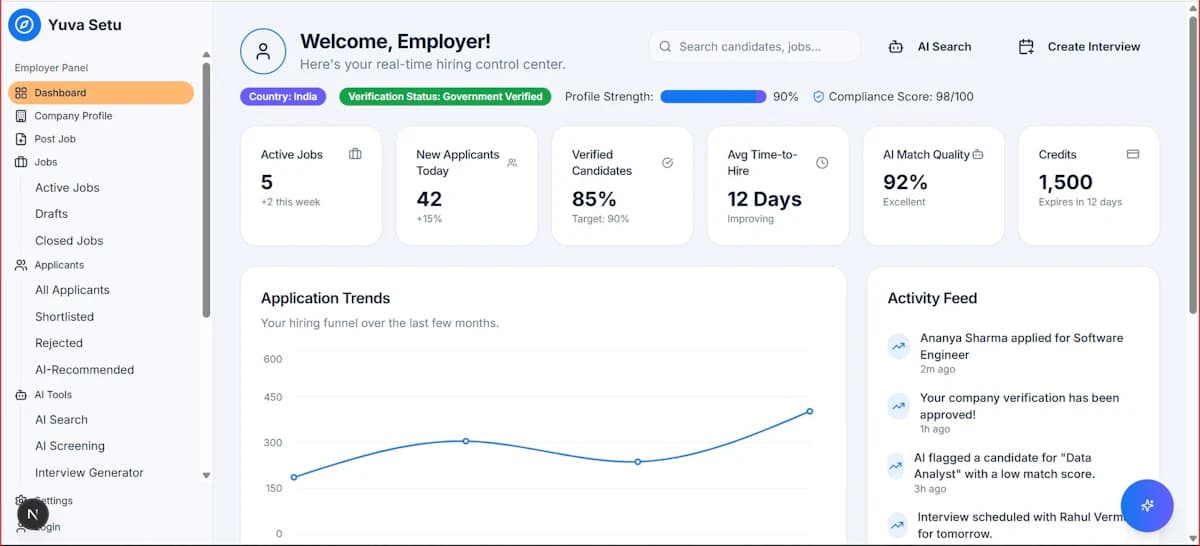
Discover which processes to automate first in your service business in 2026. Learn actionable prioritization strategies, time-saving calculations, and automation guide tailored for agencies, consultants, and freelancers.
Share article