
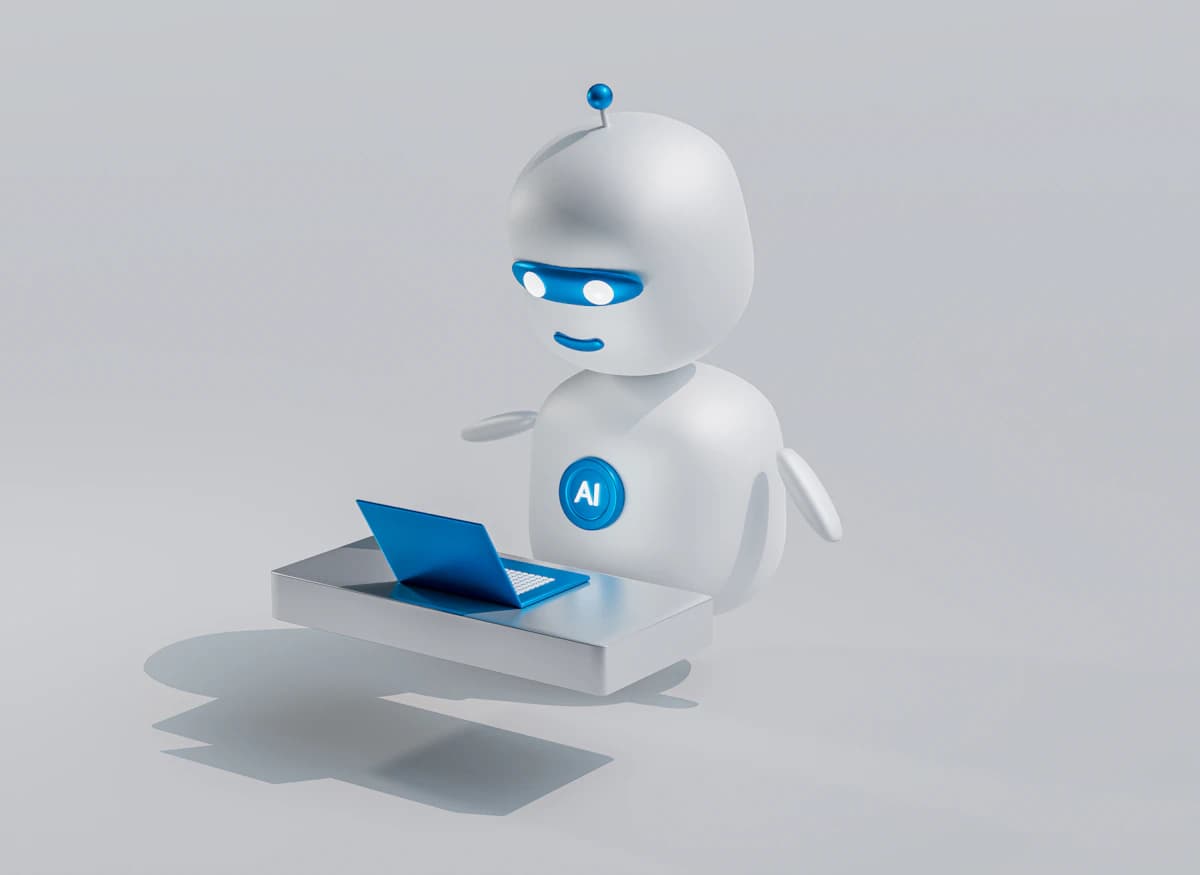
What is an AI chatbot and why your business needs one
Published on March 9, 2026
Introduction
An AI chatbot is an intelligent software application that uses artificial intelligence and natural language processing to simulate human conversation with customers, employees, and website visitors. Rather than following rigid pre-programmed scripts, modern AI chatbots understand context, learn from interactions, and provide personalized responses that feel natural and helpful. For business owners and marketing managers in 2026, implementing an AI chatbot isn't just a tech upgrade—it's becoming a competitive necessity. These tools handle everything from answering frequently asked questions and qualifying leads to processing orders and providing 24/7 customer support without human intervention. With customers expecting instant responses and businesses struggling to manage growing support volumes, AI chatbots offer a practical solution that improves customer satisfaction while reducing operational costs. Whether you're running a small e-commerce store, a B2B service company, or a growing SaaS platform, understanding what an AI chatbot does and why you need one could be the difference between stagnating and scaling effectively.
Table of contents
- Understanding AI chatbots: Definition and core technology
- How AI chatbots work: The technology behind intelligent conversations
- Key business benefits of implementing an AI chatbot
- Real-world applications: Where AI chatbots deliver the most value
- Comparing chatbot solutions: Finding the right fit for your business
- Common mistakes to avoid when deploying an AI chatbot
- Ready to automate your customer interactions with AI?
- Frequently asked questions
Understanding AI chatbots: Definition and core technology
An AI chatbot is fundamentally a conversational agent powered by machine learning and natural language processing (NLP) that engages users through text or voice interactions. Unlike traditional chatbots from the 2010s that relied on simple keyword matching and rigid decision trees, modern AI chatbots leverage large language models and deep learning to understand nuance, context, and intent. The core distinction lies in their ability to adapt and improve based on every conversation they have, making them increasingly effective over time.
What makes an AI chatbot different from traditional chatbots?
Traditional chatbots operated like flowcharts—if a user said "X," the bot responded with "Y." This approach worked for basic tasks but quickly frustrated customers when their questions didn't match pre-written scenarios. Modern AI chatbots, by contrast, use transformer-based language models that can understand the meaning behind words rather than just matching patterns. They recognize customer intent even when phrased differently and can provide contextually appropriate responses without requiring explicit programming for every possible scenario. This fundamental difference means your business can serve customers more naturally and handle a far wider range of inquiries with a single system.
Key components of AI chatbot technology
Several technical elements work together to make AI chatbots intelligent and effective. Natural language understanding (NLU) helps the chatbot comprehend what customers are asking. Machine learning algorithms allow continuous improvement through interaction data. Integration capabilities connect the chatbot to your existing systems—CRM platforms, helpdesk software, inventory systems—enabling it to access relevant information and take meaningful actions. Additionally, sentiment analysis helps chatbots recognize customer frustration and escalate appropriately, while intent classification ensures the right answers reach the right people.
Pro Tip: When evaluating AI chatbots for your business, prioritize solutions that offer transparent training data and the ability to customize responses specific to your industry. A chatbot trained only on general web content may not understand your unique products or service offerings.
How AI chatbots work: The technology behind intelligent conversations
Understanding the mechanics of AI chatbots helps you appreciate their power and set realistic expectations for implementation. At the highest level, an AI chatbot receives customer input, processes it through multiple layers of analysis, and generates an appropriate response—all within seconds.
The conversation flow: Step-by-step
When a customer types a message into your chatbot, the system first preprocesses the text to identify key terms and context. Next, the NLU engine determines what the customer wants to accomplish—this is called intent recognition. For example, "My package hasn't arrived yet" and "Where's my order?" both represent the same intent (tracking a shipment) even though they use different language. Once intent is identified, the chatbot retrieves relevant information from connected databases and generates a response that directly addresses the customer's need. If the issue is too complex, the system can seamlessly escalate to a human agent while providing all the conversation context, ensuring no information is lost.
Integration with your existing business systems
A chatbot operating in isolation has limited value. The real power emerges when your AI chatbot connects to your actual business infrastructure. Integration with your CRM system allows the chatbot to access customer history, previous interactions, and preferences—enabling personalized conversations. Connection to your e-commerce platform enables real-time product information and order processing. Integration with your helpdesk or ticketing system ensures that escalated issues move smoothly through your support pipeline without manual data entry. This ecosystem approach transforms the chatbot from a simple Q&A tool into a true business automation engine.
Learning and continuous improvement
AI chatbots improve through exposure to real conversations. Each interaction provides training data that helps the system understand your business language, customer preferences, and effective response patterns. Advanced systems use reinforcement learning, where feedback from customers and agents helps optimize future responses. This means that unlike traditional chatbots with static knowledge, your AI chatbot becomes more effective the longer it operates in your business environment.
Key business benefits of implementing an AI chatbot
The return on investment from an AI chatbot for business extends across multiple dimensions of your operation, from revenue generation to cost reduction.
Dramatically reduced customer support costs
Customer support represents one of the largest operational expenses for most businesses. A typical customer service representative costs $30,000 USD–$50,000 USD annually (salary plus benefits), and most spend significant time handling routine questions that don't require human judgment. An AI chatbot handles unlimited conversations simultaneously at a fraction of that cost. According to recent data, businesses implementing AI chatbots report 40–60% reduction in support tickets, allowing your human team to focus on complex, high-value interactions. A mid-sized company with 10 support staff handling 500 daily inquiries might reduce headcount by 3–4 positions simply by deploying an effective chatbot, yielding annual savings of $100,000 USD–$200,000 USD or more.
Enhanced customer satisfaction and retention
A 2026 survey found that customers who receive immediate responses to their inquiries are 48% more likely to make a purchase and 34% more likely to remain loyal to the brand. AI chatbots provide instant availability—no waiting for an agent, no business-hours-only limitations. They're available at 2 AM when your customer in Singapore has a question, and they're equally responsive at noon when your local market is busiest. This round-the-clock responsiveness combined with personalized interactions creates customer experiences that rival or exceed those from traditional support. Customers appreciate the speed and convenience, leading to higher satisfaction scores and increased lifetime value.
Increased sales and lead conversion
Chatbots don't just answer questions—they actively help customers move through your sales funnel. By qualifying leads, answering product questions, addressing objections, and guiding visitors toward purchases, a well-implemented AI chatbot increases conversion rates. E-commerce companies using chatbots report 15–30% increases in add-on sales as the bot recommends complementary products based on customer browsing history. SaaS companies benefit from lead qualification, with chatbots pre-screening prospects to ensure sales teams focus on high-probability opportunities. Over the course of a year, these conversion improvements often generate more revenue than the chatbot solution costs.
Valuable customer data and insights
Every conversation between a customer and your AI chatbot generates insights about customer needs, pain points, and preferences. By analyzing chatbot conversation logs, you can identify patterns—what questions come up repeatedly, which products generate the most interest, what objections prevent conversions. This data directly informs your product development, marketing messaging, and customer service strategy. Understanding that 30% of your e-commerce customers ask about your return policy, for example, might prompt you to feature this information more prominently on your website, reducing chatbot inquiries and improving the customer experience.
| Benefit | Business Impact | Measurable Result |
|---|---|---|
| Support cost reduction | Lower operational expenses | 40-60% fewer support tickets |
| 24/7 availability | Enhanced customer satisfaction | Customer satisfaction up 25-35% |
| Lead qualification | Improved sales efficiency | Conversion rates increase 15-30% |
| Personalization | Higher customer lifetime value | Repeat purchase rate +20% |
| Instant response | Competitive advantage | 48% higher purchase likelihood |
| Data collection | Better decision-making | Actionable customer insights |
Pro Tip: Set up conversation tracking and analytics from day one of your chatbot implementation. The insights you gather during the first month of deployment will shape how you optimize the system for maximum business impact.
Real-world applications: Where AI chatbots deliver the most value
Different industries and business models benefit from AI chatbots in unique ways. Understanding how businesses similar to yours use this technology can inspire your implementation strategy.
E-commerce: Driving sales while supporting customers
E-commerce businesses face intense pressure to convert browsers into buyers and support customers across multiple time zones. An AI chatbot handles the full customer journey: recommending products based on browsing behavior, answering detailed product questions, processing returns, and addressing shipping inquiries. A mid-sized online retailer implemented an AI chatbot for business solution and reduced cart abandonment by 18% through real-time assistance to customers experiencing checkout questions. The same chatbot handled 70% of post-purchase support inquiries, freeing the human support team to focus on complex issues.
SaaS and software companies: Efficient onboarding and support
SaaS customers expect rapid onboarding and responsive support. An AI chatbot can guide new users through product setup, answer how-to questions, and escalate technical issues to engineering teams with full context. A project management software company deployed a chatbot that reduced average time-to-first-response from 4 hours to 2 minutes. Within six months, customer churn decreased by 12% and customer satisfaction scores improved by 31 points. The chatbot's ability to provide instant help meant fewer frustrated users abandoning the platform mid-trial.
Professional services: Lead qualification and appointment scheduling
Law firms, accounting practices, and consulting companies deal with high-value inquiries that require human judgment. However, the initial triage and scheduling doesn't. An AI chatbot can qualify potential clients by asking targeted questions, checking availability against calendars, and scheduling appointments automatically. A mid-sized accounting firm's chatbot increased qualified leads by 23% because the system was available to answer prospect questions during evening hours when potential clients were researching services. The firm's human team was able to focus entirely on client discussions rather than administrative scheduling.
Healthcare and wellness: Patient engagement and appointment management
Healthcare providers are leveraging AI chatbots to improve patient engagement while reducing administrative burden. Chatbots remind patients of appointments, ask pre-visit screening questions, handle insurance inquiries, and answer common health questions. A dermatology practice using a chatbot reduced no-show rates from 12% to 4% through appointment reminders and pre-visit communication, and the chatbot's ability to screen insurance questions during appointment booking reduced administrative time by 5 hours per week.
Comparing chatbot solutions: Finding the right fit for your business
Not all AI chatbots are created equal. The right solution for your business depends on your industry, technical sophistication, budget, and specific use cases.
Key evaluation criteria for AI chatbot platforms
When assessing AI chatbot solutions, start with these critical dimensions:
Ease of setup and customization: Some platforms require heavy development work, while others offer visual builders that non-technical team members can use. Integration capabilities: Your chatbot needs to connect with your actual business systems—your CRM, e-commerce platform, helpdesk software. Quality of AI model: Not all language models are equal. Some are optimized for customer service, others for general conversation. Customization and training: Can you train the chatbot specifically on your industry terminology and business processes? Reporting and analytics: What visibility do you have into chatbot performance, customer satisfaction, and conversation data? Scalability: Will the platform handle growth as your business scales? Cost structure: Evaluate whether you're paying per conversation, per month, or per feature.
Recommended tools and solutions
| Feature | Zerpia AI Chatbot | Competitor A | Competitor B |
|---|---|---|---|
| AI technology | Advanced LLM training | Standard NLP | Outdated rules-based |
| Setup time | 30 minutes | 2-3 days | 1-2 weeks |
| CRM integration | Native | API required | Limited |
| Customization | High (industry-specific) | Medium | Low |
| 24/7 support | Yes | Business hours only | Community forum |
| Analytics dashboard | Comprehensive | Basic | Limited |
| Cost | Transparent per-interaction | Hidden fees | High initial investment |
| Pricing | Starting $99 USD/month | Starting $299 USD/month | $500 USD+ monthly minimum |
The Zerpia AI Chatbot stands out because it's specifically designed for small and mid-sized businesses that want the power of enterprise-grade AI without the enterprise complexity or budget. You can customize it for your specific industry, integrate it with your existing tools, and start generating results within hours, not weeks.
Implementation timeline: What to expect
Most businesses can deploy a functional AI chatbot within 2–4 weeks. The first week typically involves selecting your platform, setting up integration connections, and providing training data specific to your business. Weeks 2–3 focus on testing different conversation scenarios, refining responses, and training your team on monitoring and improvement. Week 4 involves gradual rollout—perhaps deploying to a segment of your website first, gathering feedback, and expanding deployment. Even during this implementation period, the chatbot can begin handling conversations, learning, and improving.
Common mistakes to avoid when deploying an AI chatbot
Learning from others' experiences can save you significant frustration and wasted investment.
Deploying a chatbot without clear objectives
The most common mistake is adding a chatbot to your website without defining what you want it to accomplish. Are you trying to reduce support costs? Increase sales? Improve customer satisfaction? Different objectives require different configurations. Before deployment, establish specific metrics: "We want to reduce support tickets by 35%" or "We want to increase qualified leads by 20%." These targets guide your chatbot configuration, training, and optimization.
Ignoring the importance of training and customization
An AI chatbot deployed with only generic training data will feel impersonal and often miss critical business context. Your chatbot needs to understand your products, your industry terminology, your customer base, and your unique value proposition. Invest time in providing training data: product documentation, FAQ archives, customer interaction examples, and industry-specific resources. This customization is what transforms a good chatbot into a great one that genuinely represents your business.
Failing to plan for escalation and human handoff
Not every customer issue can or should be handled by a chatbot. A critical part of chatbot strategy is determining when to escalate to human agents and ensuring that handoff process is smooth. If customers must repeat information after an escalation, you've failed them. Configure your chatbot to provide full conversation context when escalating, allowing human agents to pick up without requiring customers to re-explain their issues.
Neglecting analytics and continuous improvement
Deploying a chatbot and leaving it alone is a missed opportunity. The most successful implementations involve continuous monitoring of chatbot performance: which types of questions are answered effectively, which lead to escalations, what customers say about the experience. Use this data to refine responses, add training examples, and improve over time. Many businesses see 30–50% performance improvements in the three months following deployment simply through regular optimization.
Underestimating the importance of human oversight
While AI chatbots are powerful, they still need human oversight and governance. Establish a process for reviewing escalated issues, monitoring for chatbot errors or problematic responses, and ensuring the system stays aligned with your brand voice and values. In highly regulated industries like healthcare and finance, human review becomes even more critical.
Ready to automate your customer interactions with AI?
Implementing an AI chatbot isn't a question of whether your business should do it, but when. The technology has matured significantly, implementation timelines have shortened, and return on investment is now measurable within weeks rather than months. Whether you're looking to reduce customer support costs, improve lead qualification, enhance customer satisfaction, or automate your business with AI, the right chatbot solution can deliver meaningful results quickly. Zerpia's AI chatbot platform is specifically built for businesses that want powerful AI capabilities without complexity or massive upfront costs.
Conclusion
An AI chatbot has evolved from a novelty feature into a legitimate business necessity, particularly for companies seeking to scale without proportionally scaling their operational costs. The technology now understands context, learns from interactions, and delivers genuinely helpful customer experiences rather than frustrating users with scripted responses. By implementing the right AI chatbot for business solution, you gain immediate benefits in customer satisfaction, operational efficiency, and revenue growth. Whether your primary motivation is reducing support costs, qualifying more leads, or improving customer experiences, an AI chatbot provides measurable, quantifiable returns that justify the modest investment required to get started.
Frequently asked questions
Zerpia Editorial Team / César Solar
AI Solutions Architect |25+ years transforming businesses with technology
The Zerpia editorial team combines expertise in development, integrations, and digital strategy to produce rigorous, actionable technical content. Our goal is to help businesses and entrepreneurs understand and leverage AI as a real competitive advantage.
Share article