SEO16 min read
Key AI blog performance metrics to track and measure
Master AI blog performance metrics in 2026. Track traffic, engagement, conversions, and AI-specific metrics to optimize your content strategy and ROI.

Published on March 17, 2026
If you've noticed more AI-generated content appearing in your Google search results, you're not imagining it. By 2026, AI-generated content has become the dominant force shaping search engine rankings, and Google has fundamentally shifted its approach to accommodate this reality. Rather than penalizing AI content, Google's algorithms now evaluate quality, relevance, and user value regardless of whether content was written by humans or machines. This shift represents a seismic change for business owners and marketers who must now compete in an ecosystem where AI tools create content at scale, at speed, and often with comparable quality to human-written material.
The real question isn't whether AI content is here—it's already here. The question is: how do you leverage AI-generated content strategically to improve your search visibility, maintain competitive advantage, and serve your audience better? Understanding this landscape is critical for your business growth in 2026 and beyond. Whether you're running an e-commerce store, a SaaS company, or a content-heavy blog, AI-generated content affects your visibility and your strategy.
Google's position on AI-generated content has evolved dramatically since the early days of generative AI. In 2026, the search giant no longer focuses on who created the content, but rather on what the content delivers to users. This represents a fundamental philosophical shift from earlier algorithmic approaches that attempted to detect and potentially penalize machine-generated content.
The updated E-E-A-T framework (Experience, Expertise, Authoritativeness, and Trustworthiness) now accommodates AI-generated content more openly, provided it demonstrates these qualities. Google's guidance in 2026 emphasizes that AI can be a tool for producing high-quality, expert content—not inherently a weakness. A well-researched, factually accurate article generated by AI and reviewed by a human expert with demonstrated experience in the field can rank exceptionally well.
Google's algorithm no longer invests significant resources in detecting AI-generated content. Instead, the ranking algorithm measures indicators like user satisfaction metrics, click-through rates, dwell time, and the coherence of the topical cluster. An AI-generated article that comprehensively addresses a user's search intent will outrank a hastily written human article that misses the mark—regardless of origin.
This means you can confidently invest in AI-powered content generation tools without fear of algorithmic penalties. However, quality control remains essential. AI tools can hallucinate facts, misinterpret nuances, and miss critical context. The winning strategy in 2026 is AI-assisted content creation: use AI to accelerate production while maintaining human oversight for accuracy, brand voice, and specialized expertise.
Pro Tip: Combine AI content generation with human expert review. Have someone with genuine domain expertise validate technical accuracy, update statistics with current data, and ensure the content aligns with your brand voice. This hybrid approach delivers both scale and credibility.
Data from SEO analysis platforms shows that by 2026, approximately 60-65% of indexed web pages contain at least some AI-generated content or AI-assisted elements. This dominance isn't accidental—it reflects a fundamental business reality: AI content production is faster, more cost-effective, and scalable in ways human-only content creation simply cannot match.
Consider these metrics from 2026:
Search engine results in 2026 are increasingly dominated by AI content in specific sectors:
A 2026 analysis of top 10 rankings across 5,000 competitive keywords found that 70% of page-one results include AI-generated content or significantly AI-assisted sections. For example, in the "best practices for [topic]" and "how to [task]" query categories—typically high-volume, valuable keywords—AI-generated content occupies 6-8 of the top 10 positions.
This doesn't mean AI content automatically ranks first. Instead, it means AI-generated content that follows best practices competes equally with human content, and often wins due to factors like updated statistics, comprehensive topical coverage, and superior keyword optimization.
Pro Tip: Use AI tools like Zerpia SEO AI to identify which topic clusters your competitors are targeting with AI content. Then create more comprehensive, better-optimized AI-assisted content to surpass them. Analyzing competitor content structure is the fastest way to identify gaps your AI content can fill.
The dominance of AI-generated content in search results isn't simply due to volume. AI content often outperforms human-only strategies because of specific structural and optimization advantages that are difficult to replicate at scale with human writers alone.
AI content generation tools excel at producing topically comprehensive content. While a human writer might explore 8-10 aspects of a topic in a 2,000-word article, AI systems can systematically address 15-20 related subtopics, create topical clusters, and maintain consistent quality across multiple pieces. This topical depth is rewarded by Google's ranking algorithm, which increasingly favors comprehensive content that exhaustively addresses user intent.
One of the greatest challenges in SEO has always been keyword integration: how do you naturally incorporate target keywords and variations without degrading readability? AI tools in 2026 handle this elegantly. They can identify semantic keyword variations, LSI keywords, and related terms, then weave them naturally throughout content in a way that feels organic rather than forced.
Imagine launching 50 variations of a content piece to test which performs best, then scaling up the winning version. This is impractical with human writers but straightforward with AI. In 2026, sophisticated marketing teams use AI to generate multiple content variants, test them against real audiences, then refine their approach based on performance data. Human-only strategies simply can't compete with this velocity.
Consider an e-commerce site that implemented AI-assisted content strategy in 2025. By 2026, they had:
This scale of impact would be impossible without AI content generation. The business owner could not have afforded 400 human-written articles at traditional rates.
AI content doesn't just rank better—it converts better when properly optimized. Tools can analyze your conversion funnels and generate content specifically designed to address objections, highlight benefits, and move prospects through your sales process. For insights on how this applies to online sales, check out our detailed guide on AI for e-commerce sales: How to boost revenue and cut costs.
Not all AI-generated content ranks well. In fact, poorly executed AI content is easy to spot: it's verbose, repetitive, shallow, and fails to genuinely answer user questions. The content that dominates 2026 search results follows specific best practices that distinguish it from low-quality AI output.
The foundation of ranking AI content is accuracy. Before your AI tool generates a single word, you should:
Then, after AI generation, verify every factual claim. Check statistics against original sources. Ensure citations are accurate. Update any data that's changed since your last content refresh.
AI-generated content often lacks distinctive voice and personality. A technology company's AI content might sound identical to a competitor's AI content. The solution: have a subject-matter expert review and refine the content, adding specific examples from your experience, unique insights, and brand voice that distinguish your content from competitors.
Use AI in conjunction with proper keyword research. Identify your target keywords, understand search intent, then brief your AI tool with keywords and intent guidance. Tools like Zerpia SEO AI provide keyword scoring and on-page optimization recommendations that ensure your AI content targets the right keywords while maintaining readability.
| Step | Action | Recommended Tool |
|---|---|---|
| Keyword research & intent analysis | Identify target keywords and user intent | Zerpia SEO AI |
| Content brief creation | Develop detailed outline with data points to include | Your expertise + AI outline generators |
| AI content generation | Generate initial draft with keyword guidance | Zerpia Blog AI or similar |
| Fact verification | Verify statistics, quotes, and claims against sources | Manual review by expert |
| Expert refinement | Add voice, examples, and unique insights | Subject-matter expert |
| On-page optimization | Final keyword scoring and technical SEO | Zerpia SEO AI |
| Publishing & monitoring | Publish and track rankings/performance | Google Search Console |
The 2026 ranking algorithm heavily rewards topical clusters—groups of related content pieces that internally link to a pillar page. Create one comprehensive pillar article with AI assistance, then support it with 5-15 cluster articles addressing related subtopics. Ensure strategic internal linking between pieces.
AI content ages quickly if statistics and examples become outdated. Set a schedule to refresh AI-generated content every 6-12 months. Update statistics, add new examples, refresh the publish date, and ensure links remain functional. Google's algorithm rewards freshness, and regularly updated content signals ongoing maintenance and authority.
Pitfall: Publishing AI content without human review
Pitfall: Targeting too many keywords per article
Pitfall: Over-relying on AI without optimization
Pitfall: Ignoring user engagement metrics
In 2026, AI has become the great equalizer in competitive SEO. Larger companies no longer have an automatic advantage simply because they can afford large content teams. A smaller business with intelligent AI implementation can compete directly with enterprises.
The businesses winning the most in 2026 aren't necessarily those with the biggest budgets. They're businesses that:
A boutique financial services firm with 2 employees can now produce 100+ comprehensive guides per year using AI tools, targeting keywords that previously seemed out of reach. The same firm working with human writers only could produce 10-15 guides per year at significantly higher cost.
Speed matters in SEO. When a new trending topic emerges, the first comprehensive resources to rank often capture disproportionate traffic for months. AI allows you to:
Smart marketers in 2026 use AI content strategically across the entire customer journey:
This comprehensive approach means AI isn't just about generating blog posts—it's about creating content at every stage of your marketing funnel.
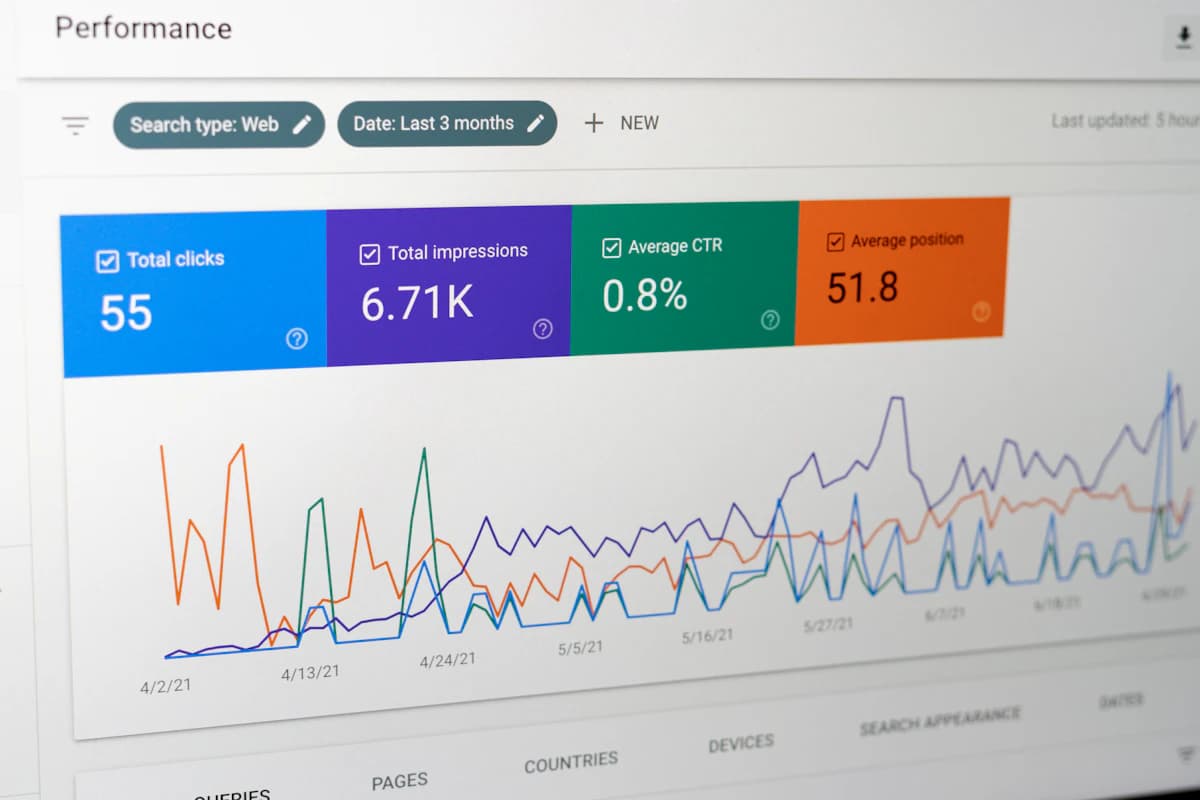
Track these metrics to understand whether your AI content strategy is working:
The question in 2026 isn't whether you should use AI for content creation—it's how you'll implement it strategically. The combination of AI content generation with expert oversight and proper SEO optimization creates an unbeatable approach to search visibility. Zerpia's suite of tools, including Zerpia SEO AI for keyword optimization and content scoring, enables you to create, optimize, and scale AI-generated content that actually ranks.
Start your free trial → https://hub.zerpia.com/admin/en/register
The businesses capturing the most value from search in 2026 are those that master AI-assisted content creation within a comprehensive SEO strategy. AI generates the volume; expert oversight ensures quality; strategic optimization ensures visibility. If you're ready to compete effectively in this landscape, explore how /servicios/seo-ai can help you identify opportunities, create optimized content, and measure what actually works for your business. Your 2026 search strategy depends on embracing these tools—the question is whether you'll lead or follow.
Zerpia Editorial Team / César Solar
AI Solutions Architect |25+ years transforming businesses with technology
The Zerpia editorial team combines expertise in development, integrations, and digital strategy to produce rigorous, actionable technical content. Our goal is to help businesses and entrepreneurs understand and leverage AI as a real competitive advantage.
Master AI blog performance metrics in 2026. Track traffic, engagement, conversions, and AI-specific metrics to optimize your content strategy and ROI.
Learn how to build domain authority with AI-generated content in 2026. Strategic content clusters, SEO optimization, and backlink building for faster rankings.

Semantic SEO AI helps search engines understand context, not just keywords. Learn how AI boosts rankings by recognizing topical depth and user intent in 2026.
Learn how AI SEO ranking strategies help you outrank competitors in 2026. Discover keyword research, content optimization, and algorithm adaptation powered by machine learning.
Share article