SEO14 min read
How to build domain authority with AI-generated content
Learn how to build domain authority with AI-generated content in 2026. Strategic content clusters, SEO optimization, and backlink building for faster rankings.

Published on May 6, 2026
If you're running an AI-powered blog in 2026, you already know that publishing content isn't enough—you need to understand what's actually working. The right AI blog performance metrics tell you which pieces drive traffic, which ones convert readers into customers, and where your AI content engine needs optimization.
Without tracking the right metrics, you're flying blind. You might be investing in AI-generated content that looks good on the surface but isn't moving the needle on your business goals. Whether you're using AI to scale your content production, improve SEO rankings, or generate qualified leads, the metrics you choose determine whether your strategy succeeds or stalls.
This guide walks you through the essential AI blog performance metrics you need to monitor in 2026—from engagement signals that Google cares about, to conversion data that actually impacts your bottom line. We'll show you what to measure, why it matters, and how to act on the insights these metrics provide.
When you publish content through AI tools, the metrics game changes slightly. Traditional blog analytics measure what happened; AI blog metrics need to help you understand both what's happening and whether your AI is generating the right content mix.
The foundation of effective measurement is knowing that not all traffic is equal. A post that ranks for a low-intent keyword might get 500 visitors monthly but zero conversions. Meanwhile, a strategically targeted piece ranking for a high-intent query might pull 50 visitors but convert 10% of them into leads. Your metrics framework needs to capture both volume and quality.
AI blog performance metrics serve multiple purposes. First, they validate that your AI content generation is producing material that resonates with search engines and readers alike. Second, they reveal which topics, content formats, and keyword clusters your AI should prioritize going forward. Third, they provide early warning signs when content quality dips or when algorithm updates affect your rankings.
The best metrics approach combines leading indicators (metrics that predict future success) with lagging indicators (metrics that show past results). For instance, time on page is a leading indicator that might predict whether someone eventually converts; actual conversion rate is the lagging indicator that confirms your content ultimately succeeded.
Pro Tip: Set up a simple scoring system where each metric gets weighted based on your business goals. If you're focused on lead generation, weight conversion metrics heavily. If you're building authority, weight ranking improvements and branded traffic higher. This prevents analysis paralysis and keeps your team aligned on what success looks like.
Organic traffic is your primary lifeline in 2026. It's the visitors who found you through Google search results—people actively looking for what you offer. For AI blog content, track both absolute organic traffic and the month-over-month growth rate.
The metric that matters most: organic sessions from your blog, measured against your target. A SaaS company targeting mid-market businesses might aim for 15,000 organic blog sessions monthly. A consultant positioning expertise through AI content might target 3,000 monthly sessions. The key is setting a baseline and tracking the trajectory.
Advanced monitoring includes segmenting organic traffic by content type. Perhaps your AI is excellent at generating product comparison posts that drive 40% of your blog traffic but struggles with thought leadership pieces that barely register. This insight shapes your future AI prompts and content strategy.
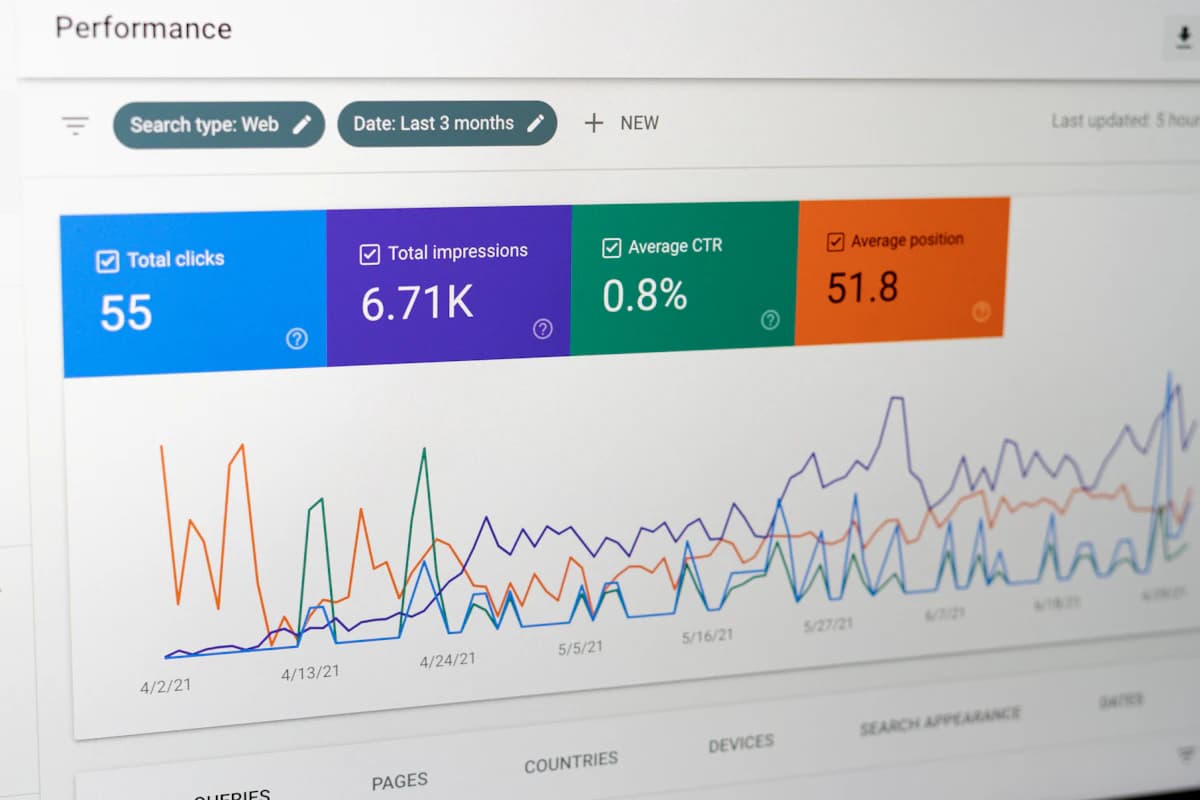
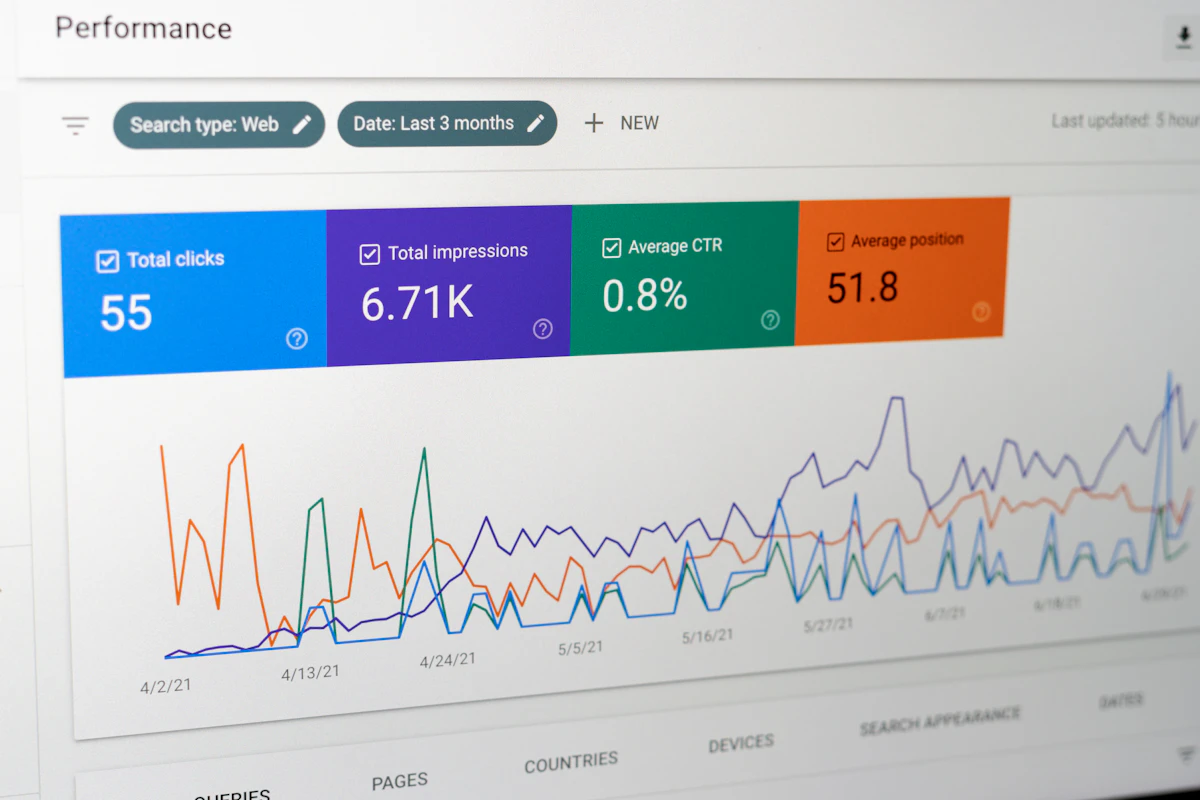
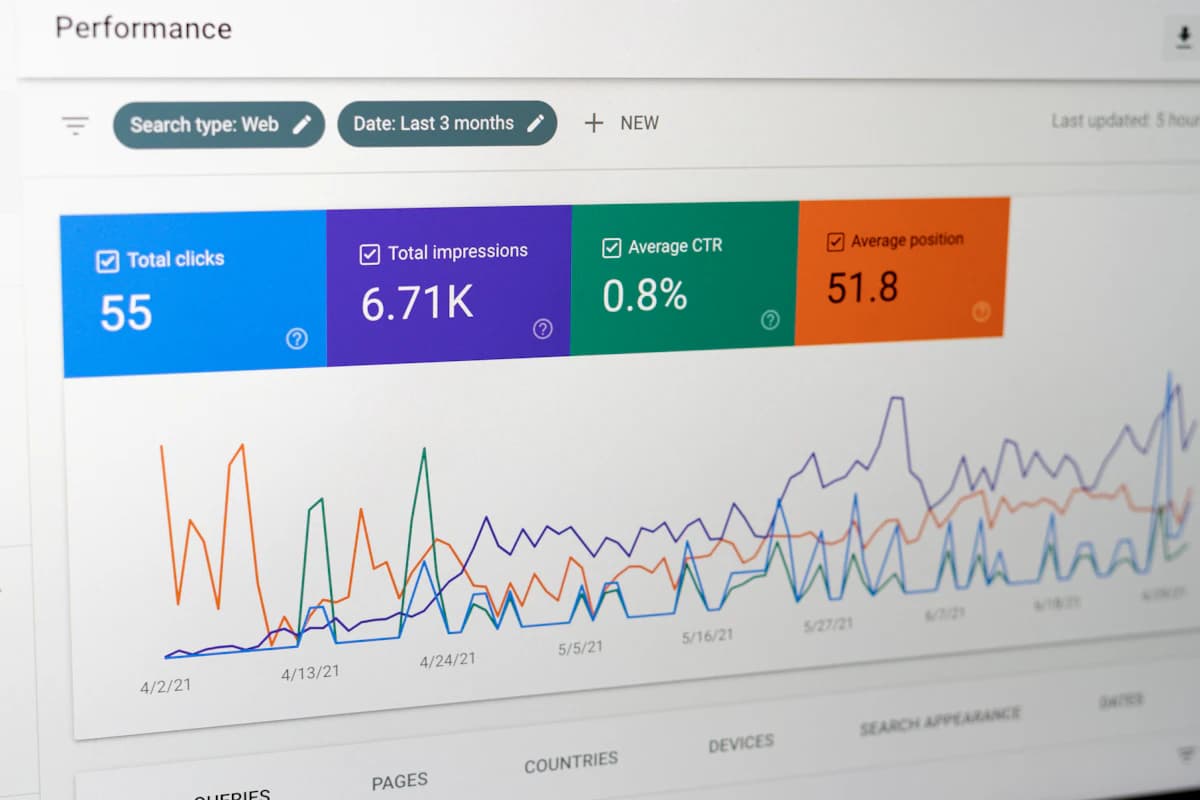
Google Search Console data should be your primary source here—it shows actual search impressions, click-through rates, and average position for each post. In 2026, most analytics platforms integrate this data automatically, making it easier to spot trends across your entire AI-generated content library.
Beyond raw traffic numbers, track how many keywords your AI blog content ranks for and at what positions. A piece on "AI marketing strategies" might rank for that primary keyword plus dozens of related long-tail variations—all of them valuable.
Monthly ranking audits reveal whether your AI content is gaining or losing ground. Tools measure visibility scores by combining your rankings across all tracked keywords, weighted by search volume. A healthcare blog might track 500+ keywords; a niche B2B software company might focus on 100-150.
The metric that reveals AI content effectiveness: improvement in average ranking position. If your AI-generated pieces start at position 45 on average, but three months later they've climbed to position 18, your content quality is improving and either your AI prompts are getting better or you're refining the optimization process.
Pay particular attention to featured snippet opportunities. Many AI blog posts can be optimized to capture position zero—the featured snippet that appears above traditional rankings. This drives significant CTR improvements without necessarily moving your overall ranking position.
CTR measures what percentage of people who see your content in search results actually click through to visit it. It's typically shown as a percentage and influenced heavily by your title tag, meta description, and whether you have a featured snippet.
For AI-generated content, monitoring CTR helps validate that your AI isn't just creating content that ranks—it's creating content that appeals to searchers. A post ranking position 5 with a 2% CTR might indicate that your title or description doesn't match user intent. Rewriting the meta description alone might push CTR to 4%, doubling your traffic without improving rankings.
Target CTR ranges vary by industry, but generally: positions 1-3 should see 20-40% CTR, positions 4-6 should see 5-15%, positions 7-10 should see 1-5%. Posts falling significantly below these benchmarks are good candidates for title/description optimization or, in some cases, content restructuring.
Time on page measures how long visitors stay on each post. Combined with scroll depth (how far down the page visitors scroll), these metrics reveal whether readers find your AI content valuable enough to engage with it.
In 2026, average time on page for blog posts ranges from 1.5 to 3 minutes depending on content type and industry. A 2,000-word AI-generated article should target 2-3 minutes minimum. If your average is 45 seconds, readers are bouncing before finishing the first section—a signal that either your headline doesn't match the content or the opening paragraphs aren't compelling.
Scroll depth is equally important. If 80% of visitors reach 50% of your content, that's strong engagement. If only 30% scroll past the first quarter, your AI is likely burying the valuable information too deep in the article structure.
Create a simple engagement scorecard:
| Engagement metric | Excellent | Good | Needs improvement |
|---|---|---|---|
| Average time on page | 3+ minutes | 2-3 minutes | Under 2 minutes |
| Scroll depth (% reaching 75%) | 60%+ | 40-60% | Under 40% |
| Bounce rate | Under 40% | 40-60% | Over 60% |
| Pages per session | 2+ | 1.5-2 | Under 1.5 |
Bounce rate—the percentage of visitors who leave your site after viewing just one page—is a critical quality signal. While bounce rate alone doesn't determine rankings, it influences how Google's AI models assess whether your content satisfied the searcher's intent.
For AI blog content, a bounce rate of 40-50% is typical for informational posts. Service-oriented content (like how-to guides) often has lower bounce rates (30-40%) because visitors are more intent on consuming the information. Commercial content (product comparisons, pricing pages) might have higher bounce rates because browsers are comparing options before deciding.
The real value comes from analyzing exit pages. If visitors consistently leave from a specific section, that section might be poorly written, confusing, or missing the information they expected. Use exit page data to identify which AI-generated sections need human refinement.
In 2026, social signals still matter—not as direct ranking factors, but as indicators of content quality that leads to backlinks. An AI post that gets 50 shares is more likely to earn citations and links from other websites than one that gets 2 shares.
Track shares by platform (LinkedIn for B2B content typically outperforms Twitter for business audiences). More importantly, monitor which posts earn backlinks. A post with 100 organic shares but zero backlinks might indicate it's entertaining but not authoritative. A post with 10 shares but 15 backlinks from relevant industry sites is signaling stronger topical authority.
Use tools to track backlinks to specific blog posts over a 90-day window. Posts that earn links within their first month are often optimized well for their target audience. Posts that don't earn links after 3 months might need refreshes or promotion strategies.
Pro Tip: Monitor the quality of backlinks, not just quantity. A single link from a domain authority 60+ website is worth more than 10 links from low-authority blogs. Set up alerts for new backlinks to your top-performing AI content, and you'll identify opportunities to build relationships with sites linking to you.
Ultimately, blog traffic that doesn't convert is audience building without business impact. For most businesses, this means tracking how many blog visitors become leads.
Set up conversion tracking for specific actions: form submissions, newsletter signups, demo requests, or content downloads. The conversion rate is calculated as (conversions / total sessions) × 100. A B2B SaaS blog might see 2-5% conversion rates on blog traffic; a consultant might see 1-3%.
The critical insight: different content converts at different rates. A post ranking for a bottom-funnel keyword like "[Your Industry] pricing" might convert at 8% because searchers are actively considering a purchase. A post on "[Your Industry] basics" might convert at 0.5% because it attracts early-stage browsers.
Track conversion rates by content topic or keyword intent level. This data shapes your AI content calendar—you'll want more high-converting content and perhaps fewer beginner-level pieces.
This metric bridges blog metrics and business profitability: how much revenue are you spending to acquire each customer through blog-sourced leads?
Formula: (total marketing spend on blog / customers acquired from blog traffic) = CAC
A company spending $5,000 USD monthly on AI content tools and publishing that generates 50 qualified leads with a 20% conversion rate (10 new customers) has a CAC of $500 USD from the blog channel. If your average customer lifetime value is $2,000 USD+, that's a healthy business metric.
Tracking CAC over time shows whether your AI blog strategy is becoming more efficient or less efficient. If CAC rises from $300 USD to $500 USD over six months, it suggests either content quality is declining or you're targeting lower-intent keywords.
For e-commerce blogs or businesses with direct sales, track revenue per session. Calculate this by dividing total revenue from blog traffic by total blog sessions.
A healthy e-commerce blog might generate $5-15 USD in revenue per session. A B2B SaaS blog might generate $0.50-$2.00 USD per session initially (since B2B sales cycles are longer and indirect).
The more advanced metric: correlation between blog topics and customer lifetime value. If customers acquired through posts about "premium features" have a 40% higher lifetime value than customers from "budget comparison" posts, that insight should guide your content prioritization.
Create a content value matrix:
| Content topic | Monthly traffic | Conversion rate | CAC | Customer LTV | ROI |
|---|---|---|---|---|---|
| Enterprise solutions | 800 | 4.5% | $450 USD | $8,500 USD | 18.9x |
| Mid-market features | 2,200 | 3.2% | $680 USD | $4,200 USD | 6.2x |
| Budget options | 4,100 | 1.8% | $920 USD | $1,800 USD | 1.96x |
| General education | 5,600 | 0.4% | $3,200 USD | $950 USD | 0.30x |
This table reveals that while "General education" drives the most traffic, it's actually destroying your acquisition economics. You might shift your AI content strategy to focus more on mid-market and enterprise topics.
When using AI to generate blog content, track your actual economics. How much does it cost to generate, edit, and publish each post?
In 2026, an average AI blog post might cost: AI generation tool ($5-15 USD per post), human editing ($30-60 USD depending on depth), and publishing/optimization ($10-20 USD). Total: $45-95 USD per post. At scale, companies publishing 40 posts monthly spend $1,800-3,800 USD on content production.
Compare this to hiring writers at $100-300 USD per post plus editing. Your AI efficiency gain is 50-75% cost reduction while maintaining or improving quality.
Track time to publish, too. If a manually written post took 4 weeks from assignment to publication, but your AI-assisted process takes 5 business days, you're not just saving money—you're increasing agility. You can respond to trending topics faster and adjust your content strategy based on market feedback more quickly.
Not all AI output is equal. Implement a content quality scoring system that rates AI-generated pieces before publication.
Quality scores might evaluate:
A 100-point scale helps: 80+ is publishable immediately, 60-79 requires light editing, under 60 should be regenerated. Track what percentage of your AI output falls into each category. If only 20% of generated content scores 80+, you might need better prompts or to adjust your AI tool configuration. If 75% scores 80+, your AI-human workflow is optimized well.
AI tools make it easier to keep content fresh. In 2026, track how often you refresh existing AI content with updated data, new examples, or improved structure.
Posts that receive updates within their first year of publication tend to maintain or improve rankings 60-70% of the time. Posts that never get updated often decline in rankings as they age.
Monitor: average time between publication and first update, percentage of blog content refreshed quarterly, and ranking impact of refreshes. If refreshing a post moves it from position 12 to position 7, that data validates that refresh frequency is a ranking factor worth investing in.
Tracking AI blog performance metrics transforms content from a guessing game into a science. When you know which metrics drive your business goals, you can optimize ruthlessly—doubling down on what works and eliminating what doesn't.
Zerpia Blog AI automates content generation while our analytics integration helps you track every metric that matters. Start monitoring your performance today and watch your AI content work smarter, not just harder. With the right metrics in place, your blog becomes a predictable revenue engine that scales with your business.
The metrics you choose to monitor determine whether your AI blog investment pays off. By tracking traffic, engagement, conversion, and AI-specific metrics, you transform raw data into strategic decisions. Your AI blog becomes less about publishing volume and more about publishing value—content that ranks, converts, and compounds your business growth over time.
Ready to put these metrics into practice? Explore Zerpia Blog AI to see how integrated metrics tracking can accelerate your content performance, or review our guide on SEO blog strategy for consultants positioning yourself as an expert with AI content to understand how metrics fit into a larger content authority strategy.
Zerpia Editorial Team / César Solar
AI Solutions Architect |25+ years transforming businesses with technology
The Zerpia editorial team combines expertise in development, integrations, and digital strategy to produce rigorous, actionable technical content. Our goal is to help businesses and entrepreneurs understand and leverage AI as a real competitive advantage.
Learn how to build domain authority with AI-generated content in 2026. Strategic content clusters, SEO optimization, and backlink building for faster rankings.

Semantic SEO AI helps search engines understand context, not just keywords. Learn how AI boosts rankings by recognizing topical depth and user intent in 2026.
Learn how AI SEO ranking strategies help you outrank competitors in 2026. Discover keyword research, content optimization, and algorithm adaptation powered by machine learning.

Build an SEO blog for consultants that attracts inbound leads and positions you as an expert using AI-powered content creation in 2026.
Share article